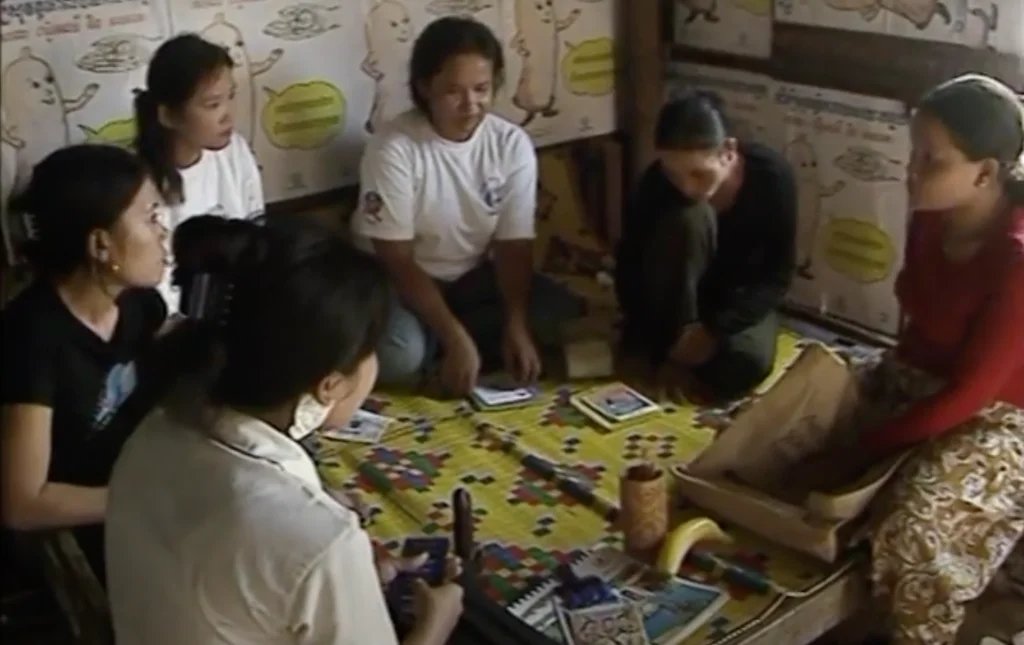
In the year 2000, I was working with an HIV and AIDS prevention organization in Cambodia. The epidemic was accelerating, and the solution seemed straightforward: distribute condoms and teach people how to use them.
Teams fanned across the countryside with boxes of condoms, demonstrating their use on bananas. We returned home satisfied with our work. But the virus kept spreading.
Follow-up visits revealed the problem: villagers were doing exactly what we’d shown them—putting condoms on bananas before sex. Our demonstration had been perfectly clear to us but completely misunderstood by them. We’d failed to account for the gap between our context and theirs.
The solution was equally simple: we used life-sized wooden phallus models instead. Infections dropped dramatically. A wooden sculpture saved thousands of lives.
But the story doesn’t end there.
Years later, a well-educated visitor from the West saw that sculpture in my desk drawer. He didn’t ask about it. Instead, he crafted his own narrative and shared it with others. His assumptions, born from a single glimpse without context, damaged my reputation. The same phenomenon. Different setting. Same root cause.
We live in an age drowning in information yet starving for understanding.
Today’s challenges—climate change, political polarization, AI safety, public health, technological disruption—aren’t primarily caused by lack of data. They’re caused by the same mechanisms that made Cambodian villagers put condoms on bananas and made my educated visitor assume the worst: We see part of the picture and believe we see it all. We receive information through our existing frameworks and never question if those frameworks fit. We mistake the delivery of information for the transfer of understanding. We assume our interpretation is obvious, universal, correct.
The Cambodian villagers weren’t stupid. My visitor wasn’t malicious. The NGO workers weren’t incompetent. Everyone acted reasonably within their own context. The problem was the invisible gap between contexts—and no one realized it was there.
This is the ignorance that threatens us now. Not the absence of facts, but the illusion of understanding. Not stupidity, but the failure to recognize that there are things we don’t know.
Consider how many of our current crises persist because we’re demonstrating with bananas when what we need are wooden models? How many solutions fail because we haven’t checked whether our message was understood the way we intended it? How many enemies have we made from people who glimpsed something in our drawer and never asked?
The antidote isn’t more information. It’s humility about what we understand and curiosity about what we might be missing. Before we dismiss someone as ignorant, we might ask: What context do they have that I lack? What am I seeing in their drawer that I’m interpreting without asking? Is the model I am using appropriate for my message to be understood?
Ignorance can be overcome—but only if we first recognize it in ourselves. The villagers learned when shown clearly. I learned when I saw our misunderstanding. Humanity too, could learn to live in Peace, if the bananas were replaced with more appropriate models.
The most dangerous ignorance is the kind that feels like knowledge.


