Honduras is a Catholic nation, although it has many Christian missions as well. Most Hondurans are born Catholic and prefer to die Catholic; however, in between, they may take advantage of the Christian missionaries who make their money from converts by giving away free items in exchange for attendance. The priests, however, tend to be more miserly with funds, and many expect rewards for their services.
When I first moved to Yocon, I noticed the Catholic chapel in the middle of town. It was not in very good shape and was definitely in need of paint. I had come to Honduras with a Baptist missionary, and although I had known Catholics before coming, my upbringing still formed a cloud around my thinking, and I viewed them as idol worshipers. I asked them why they didn’t get the money from the priest for the paint, and they told me that he said it was their responsibility. So, like a good Christian, I helped them out, hoping my efforts would pay off in eventual converts and maybe some extra cash from a newsletter article.
The old Catholic priest assigned to that area didn’t come around very much, except to collect the monthly dues. Once in a while, he made an appearance on a Sunday morning, and when he did, everyone knew it because he would blow his trumpet very loudly to announce his arrival. The first time I heard it, I thought the Rapture was happening because it sounded so out of place. He didn’t like that Baptist missionaries had invaded his territory, and told the people to take everything they could get from me, but not to listen to a word I said.
At one point, he surprised me by showing up at my clinic — alone. He had run out of his heart medicine and was wondering if I had anything I could give him until he could get back to the city.
“With or without a sermon?” I said jokingly, as I handed him a box of something similar to the medicine he had shown me.
He had a puzzled look on his face at first, but then smiled as he realized someone had told me about his instructions. We shook hands, and I thought, at the time, that it could be the start of a new relationship. However, a few weeks later, he drowned while trying to cross a river during a downpour. Supposedly, his jeep got stuck, and when he got out to engage the four-wheel drive, a log struck him in the head, causing him to lose his balance in the rising current of the river.
Living in a small, remote village is much like living in a dormitory. There are no secrets. It was difficult at first, but eventually I became less aware of our differences and more aware of our similarities. I realized that those I once thought of as idol worshipers — because they prayed to a statue — were no different than me, who prayed every night believing that my prayers could somehow penetrate the ceiling of my room and reach the ears of an old man who lived somewhere up in the stars. That awareness allowed me to look more seriously at spirituality, both mine and theirs.
I have always been a big believer in miracles, and that fits in nicely with the Catholic culture. The only problem with that is that people who believe in miracles tend to be susceptible to con artists and magicians.
When I first arrived in Honduras, I was taken to see the Virgin of Suyapa, the patron saint of Honduras. At the time she was kept in a small temple, but they were building her a new temple right next door. There was a problem, however: the new temple was years in the making and had gone way over the original budget. Pleas for more money had gone out, but people were tired of giving and giving. It was estimated that $1,000,000.00 was needed to finish the job.
A few weeks into my stay in Honduras, the Virgin figurine was supposedly stolen from the temple, and a massive search was undertaken. Literally every car in Honduras, including ours, was searched until she was finally found in the men’s bathroom of a gas station. There was much jubilation throughout the country; however, the bad news was that she had been violated, and her diamond-studded dress was missing. To restore her and have a replica dress made was estimated to cost $1,000,000.00. The money was raised in just a few days, the small figurine was returned to her chapel, work on the new temple was completed, and no one, to my knowledge, ever questioned the validity of the incident.
On another occasion, the newly assigned Catholic priest came into our village, announcing that there would soon be several days of complete darkness in the world. Flashlights and even candles would not work during that time; however, candles blessed with holy water were the only ones that would work, and every household needed to have them or risk evil spirits entering their homes. I was one of the few households in the community that refused to buy the candles. The darkness never came, but to my knowledge, no one ever asked for their money back.
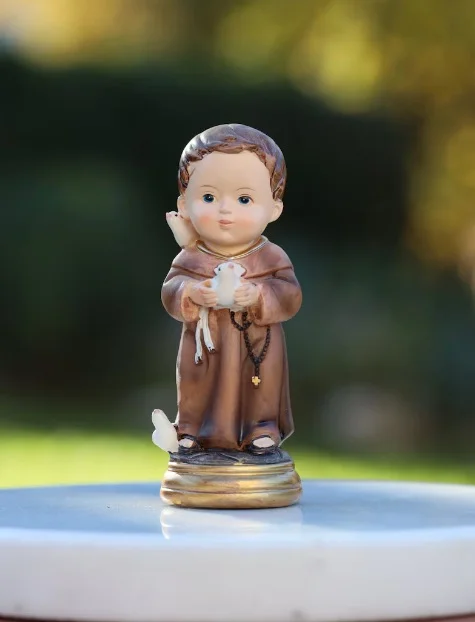
Just outside of Yocon lived a very devout woman who had a statue of a small boy saint on the mantel of her fireplace. She had prayed to it for many years, and over time the paint began to fade, and parts of it were damaged by children touching it, or on the few occasions when it was knocked to the floor by accident. She would, at times, announce a special celebration for her saint, and people from the village would respectfully come to pay homage to it. Usually, they would leave some money at the altar, but over the years, the donations grew less and less because of its worn appearance.
One day, she came running into the village, all excited, and told everyone that God had taken the saint back into Heaven. She had seen it with her own eyes ascending into the sky when she returned from her afternoon walk. Everyone went running to her house to see if she was really telling the truth. When they got there, they found the statue missing from the altar and therefore assumed that a miracle had indeed occurred.
A few weeks later, she came running into town again, but this time she said that God had sent her a new saint. She saw it descending from Heaven when she returned from her walk, and she had to run to catch it before it hit the ground. All of the villagers went running back to her house to see if it was true. Sure enough, there it was: a brand new, brightly colored statue of another little boy. Everyone crossed themselves and offered prayers, dropping their money on the altar as they left the house. Even the boys who lived with me were excited about this miracle and couldn’t stop talking about it all afternoon.
That night at the dinner table, I asked them what they really thought of the incident, and all of them were still very convinced that it was real. So I asked them this question: “If the statue really came down from Heaven… why would there be a MADE IN GUATEMALA seal stamped on the base of it?” Needless to say, it ended the conversation and perhaps shook their faith in miracles. But because of this incident, they were forced, from that day onward, to start looking at things more critically.
They say ignorance is bliss, and perhaps that is so, but often the ignorant are misled by men or women with selfish motives. I am convinced that miracles do still happen, but I suggest looking for the MADE IN sticker before you put your trust in one.


