I would not classify myself as a coward. At times in my life, I have acted bravely in the face of danger. Most men—and increasingly more women—wonder, as I did in my youth, how they would respond under the fire of enemy guns. It is an age-old question that cannot be answered until you are placed in a real-life-and-death situation. Then, before you even have time to think, you already have your answer.
My experience under fire was relatively short—three days of intense fighting in the lowlands of South Vietnam. Overall, I believe I did as well as any of my compatriots, and in the face of the enemy, some even considered me a hero. Before you assume this is another one of my bragging sprees, however, I must tell you there is another side of me I am not proud of, and speaking of it—even today—can make me sick.
It is something inherent in most of us, or perhaps something instilled in us by well-meaning parents: respect for our elders and teachers. Obey the laws and your government officials. Serve your country and follow the orders of those in authority over you. Never question, never doubt, and do not judge, for God is in control and He will punish the unjust. It is good advice for Sunday school children—but the Marine Corps is not Sunday school. And although it demands the same blind faith and obedience to its officers as the church demands of its pastors, the price of breaking the code of conduct on the battlefield can be a friendly bullet in the back of your head.
Two incidents that occurred on the same day in 1968 changed my life forever and set in motion a conflict that has raged inside me ever since. It led to my court-martial and has contributed to my being fired from every job I have ever held. It struck me harder than any bullet ever could and caused more internal damage than all the bombs and mortars dropped around me. It tore the innocence from my soul and forced me onto an endless journey of recompense for a debt that can never be repaid. I witnessed the murder of two children and did nothing to stop it.
What is it that makes us hesitate when we see someone in authority doing something we know is wrong? Why do even brave men hesitate to stop a friend from committing evil? Why is it so easy to judge an enemy we have never met and decide he should die simply because he is our enemy, yet so difficult to judge a friend, even when we have witnessed his wrongdoing?
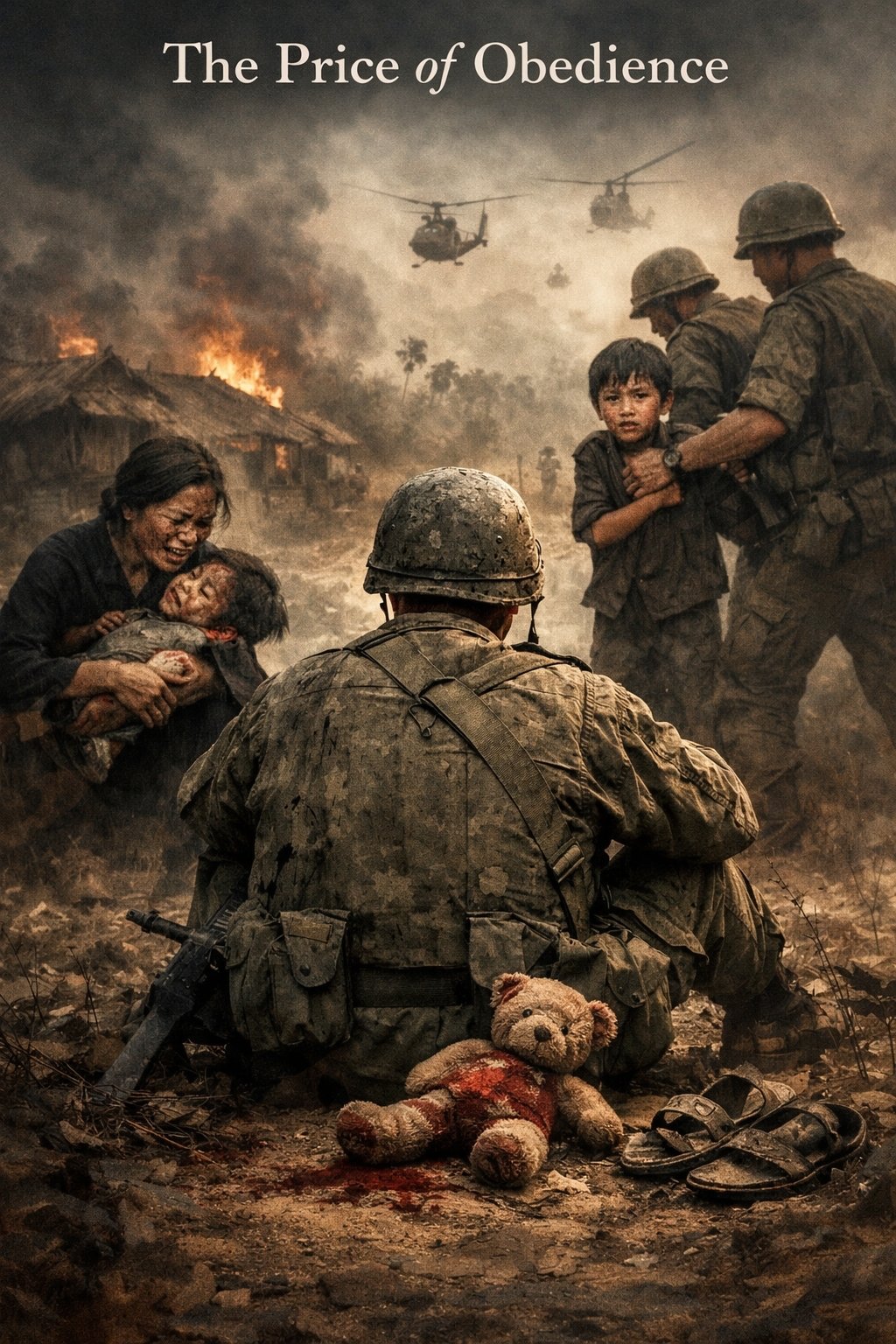
These questions have haunted me ever since the day I was ordered not to treat the bleeding wounds of a young victim of our bombing. I obeyed, just as I had been taught in Sunday school, and I watched him bleed to death in his mother’s arms. All I had to do was disobey the order, and perhaps that child would still be alive today.
Later that same day, we captured a young boy wearing a green shirt. He said he had taken it from a dead man because he had no clothes of his own. The captain ordered him killed because headquarters had instructed us to take no prisoners that day—even though there was no evidence, other than the green shirt, to suggest he was a soldier. I did nothing to stop them from dragging him away. Now I see his horrified eyes pleading with me, day after day, to do something… but I can’t. And though I may help ten thousand others like him, I must admit that I let him die because I was afraid to say, “STOP! You have no right to kill him.”
I do not believe in violence, but I do believe in confrontation when it stands against evil. Jesus did not form a rebel army to fight the evils of His time, but neither did He retreat in the face of hypocrisy and wrongdoing. He confronted it directly and instructed us to do the same. I failed in my youth to follow His example, and I have paid a price for that failure. Since then, I have tried to call people to accountability, but it has cost me every job I have ever held.
I still grow discouraged at times when I see the greed and wrongdoing of selfish men and women in today’s world. Yet I find some solace in knowing that the flames of compassion now burning in my heart for all humanity will one day become the tormenting fires that burn in the self-imposed hells of those who live only for themselves.


